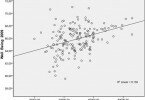
What does well-being have to do with the economy have to do with the creative industries? For the purposes of this entry, let’s use Gallup’s well-being that measures life evaluation, emotional health, physical health, healthy behavior, work environment and basic access (definitions of each here); GDP for the economy; and the creative class for the creative industries.
Thanks to the Gallup-Healthways Well-Being Index, cities are now measured for happiness, with the San Jose, Washington DC,
…
read more…
Posted by Neil Takemoto in
•
Creatives
•
Economic Gardening |
Link |
We all know the economy needs jobs. Not industrial economy jobs, which we’re transitioning away from, but knowledge economy jobs. But where did the Apples, Microsofts and HPs that fuel today’s economy come from? That’s right, startups.
Our entry Gazelles + Economic Gardening = Prosperity highlighted this very trend back in 2003. In 2007, we posted how every neighborhood needs a coworking space. Today we’re in a jobs crisis. The time is right to converge these two trends.
First, Blake
…
read more…
Posted by Neil Takemoto in
•
Coworking
•
Economic Gardening |
Link |
From a creative economy point of view, are towns, cities and even regions not within a ‘mega-region’ (10 to 50 million people) not worth investing significantly in?
From the Prospect article, Ruse of the Creative Class, responding to the premise behind economist Richard Florida’s upcoming book, The Great Reset: How New Ways of Living and Working Drive Post-Crash Prosperity,
In a warm-up to his next book, Florida has been arguing that the recession has so decimated many cities and regions
…
read more…
Posted by Neil Takemoto in
•
Economic Gardening |
Link |
The motivating factor behind writing entries for this blog is that I get to work directly with progressive creatives and developers to crowdsource these concepts into built reality.
So, considering the state of the economy, what are creatives’ solution in how the development of a building can become a symbol for economic growth? The following framework of a building will soon be crowdsourced in Washington DC as an answer:
- Local, independent businesses on the ground floor. Not only do local
…
read more…
Posted by Neil Takemoto in
•
Economic Gardening |
Link |
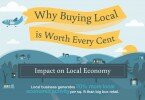
How much of a greater impact do local retailers have on nationals? The Urban Conservancy recently completed a study with Civic Economics to answer just that, called Thinking Outside the Box: A Report on Independent Merchants and the New Orleans Economy. Keep in mind this is just economics, and not considering the cultural impact on the local neighborhood.
According to the study, when compared to leading chain competitors on a per square foot basis, local retailers:
- generate twice the annual
…
read more…
Posted by Neil Takemoto in
•
Economic Gardening |
Link |
New Orleans is attracting scores of entrepreneurs and small businesses, and there hasn’t been a better time to be a creative. “There has never been a better time in Louisiana for the creative class to thrive,” says state lieutenant governor, Mitchell J. Landrieu. Why such a bold statement?
First of all, the evidence.
- New Orleans’ metro area gained 100,000 nonfarm, post-Katrina jobs from October 2005 to June 2009, and by 2016 is expected to grow 24% from 2006 levels to 98.8% of
…
read more…
Posted by Neil Takemoto in
•
Coworking
•
Economic Gardening |
Link |
For the purpose of understanding the evolution of our economy and our quality of life, if there was ever one definitive graphic, this is it. However, to understand the current creative, knowledge-based, whole new mind economy from an individual’s point of view, you have to get to know the work at ThinkStudio, a global think tank based in Switzerland.
The chart above illustrates the direct economy, where “customer knowledge is replacing producer knowledge”. ThinkStudio illustrates this
…
read more…
Posted by Neil Takemoto in
•
Crowdsourcing
•
Economic Gardening |
Link |
According to economist Richard Florida in his recent article, the solution posited by the title of his recent Atlantic Monthly article, How the Crash Will Reshape America, is through a renewed emphasis on velocity and density. This is also the article that prompted Suburbia R.I.P. in Fast Company Magazine.
Regarding how we started to get into this mess, “For the generation that grew up during the Depression and was inclined to pinch pennies, policies that encouraged freer spending were
…
read more…
Posted by Neil Takemoto in
•
Economic Gardening |
Link |
Arlington County, Virginia has long been considered a creative class mecca, with a high concentration of educated knowledge workers. Arlington has also been attracting cultural creatives (socially and environmentally conscious) and rengens (those effecting a renaissance level of change), all three of which are defined on this site as creatives.
One thing missing though, was an identifiable community of creatives that could collaborate to define Arlington’s creative economic and culture
…
read more…
Posted by Neil Takemoto in
•
Economic Gardening |
Link |
One can look at the economic downturn as a depression, or one giant market correction. We simply have way too much retail - take a look at the chart below. Amazing isn’t it? The message may be clear that the era of big boxes and shopping malls has peaked, but the question is, what’s the next generation of more sustainable retail going to look like?
For starters, look at the top shopping districts around the world that have stood the test of time, and you’ll often find pedestrian-only
…
read more…
Who would have thought we’d be seeing ads like these from Fortune 500 companies envisioning a more sustainable, yet creative culture and economy?...
“Remember the Joneses and all their stuff? And how people were always trying to keep up? Well some of us woke up instead. We no longer want big and flashy. We want real, true and honest.“
[Through recessions…]“...people start enjoying the small things in life. A home-cooked meal. Time with loved ones. Appreciating the things we do have, the
…
read more…
Posted by Neil Takemoto in
•
Economic Gardening |
Link |
Some pretty heady words, I know, but for many creatives, the last thing they want is a job - a paid position of regular employment. Why? Because they’re entrepreneurs, free agents, independents… and they’re looking for projects and transactions, not jobs.
Now, combine that with this research from the Creative Class Group concluding that the greater the % of the creative class in the workplace, the greater the city’s economy, and you have to begin to wonder…
Should economic development focus
…
read more…
Based on the previous entry of applying the Long Tail to building a creative economy, here’s a video illustrating how it could work…
Phase I. To grow a creative economy and culture, establish a service to link creatives with companies needing creative talent, whether as employees or vendors. This is the ‘big head’.
Phase II. Develop a website to capture the Long Tail, that is, the 95% of the creatives that don’t have connections to the companies and organizations that can hire them, but have
…
read more…
Posted by Neil Takemoto in
•
Economic Gardening |
Link |
Presently, economic development - “efforts that seek to improve the economic well-being and quality of life for a community by creating and/or retaining jobs and supporting or growing incomes and the tax base” - is managed by government agencies. Then there’s the chamber of commerce, a network of business owners mainly focused on improving their own members’ economic bottom line.
In the age of convergence, expect to see a combination of the two emerge, where creatives take it upon themselves
…
read more…
Posted by Neil Takemoto in
•
Economic Gardening |
Link |
Louisiana is one of the few states that has a very clear program on establishing natural cultural districts for creatives. In 2007, the state legislature approved the Louisiana Cultural Districts Program, also referred to as Cultural Products Districts because of the program’s emphasis on tangible products. As is stated on the state’s website, “The primary goal of the Cultural Districts program is revitalizing communities by creating hubs of cultural activity.“
So what is the state offering?
…
read more…
The creative economy is often ineffectively defined by the creative skills/talent: media, film, design, music, visual art, etc. However, those are arguably just the means, and what’s overlooked are the cultural products that result from a convergence of those creative skills. Now that’s what the creative economy is about.
To understand in greater detail how creatives with talent transform their skills into cultural products that grow an economy, you’ll want to read Elizabeth Currid’s The
…
read more…
Posted by Neil Takemoto in
•
Economic Gardening |
Link |
If you’re looking for an effective precedent in how to jumpstart the creative economy in your city, you need to learn about CreateHere in Chattanooga, Tennessee.
On July 1, 2007 Helen Johnson and Josh McManus entrepreneurially initiated a three-month research and planning project focused on studying the engagement of creatives in the city with the intention of gaining a better understanding of how to retain and attract them, crucial to its transition to a post-industrial knowledge economy.
…
read more…
Perhaps too many people buying homes they couldn’t afford wasn’t the problem behind the Wall Street collapse, but a symptom. The real problem may be that there are too many homes out on the market that people could never afford in the first place. In other words, the average U.S. American can’t afford $300,000 for a home, as is the going rate in many cities. So rather than lend out more money to buy homes people can’t afford, that banks can’t back, perhaps the real solution is addressing the
…
read more…
When it comes to industrial design, Milan, Italy is a world capital, leaders in fashion and architecture and home to Alfa Romeo and Fiera Milano, the largest trade fair complex in the world. There is no product
design equivalent in the U.S., but Cleveland, Ohio is poising itself to take on that mantle. What’s the point? For one, design is found to be correlated to economic growth. If you’re wondering how industrial design makes an impact, think of Apple and their influence.
In the heart of
…
read more…
In 1956 the Federal Aid Highway Act ushered in the auto age, with the U.S. government funding 90% of the costs to build 41,000 miles of interstate highways over 20 years, an equivalent of $200 billion today. Highways are still being built, but they’re also coming down as cities are realizing that a digital infrastructure (ie the internet; wi-fi, fiber optic, cellular, satellite networks) negates a continued need for heavy asphalt investment, and at a much lower economic, environmental and
…
read more…
What’s leading economic growth in our cities?
Robert Litan, VP of Research and Policy at the Kaufmann Foundation* and director of Economic Studies at the Brookings Institution**, concludes that more of our growth today is generated by entrepreneurial or newer companies. He answers the following question in this interview from Smart City Radio:
Smart City Radio: “If you were advising a local urban leader on how he or she could encourage the start up of businesses that would have a good chance
…
read more…
Posted by Neil Takemoto in
•
Economic Gardening |
(0)
Trackbacks |
Link |
I first profiled Tryst back in 2003 as a popular coffeehouse third place in Adams Morgan, Washington DC. But five years later, ten years after it first opened, it’s not only become a neighborhood institution, but it really should be seen as a contemporary model for job creation.
Here’s the big picture:
1. A majority of big businesses come from small businesses, and small businesses are started by entrepreneurs… from their homes.
2. Many (not all) entrepreneurs who tried working exclusively
…
read more…
Posted by Neil Takemoto in
•
Economic Gardening
•
Third Places |
(0)
Trackbacks |
Link |
If you’re looking to establish a beta community to crowdsource a natural cultural district (kudos to those of you who don’t have to click on the words to know what’s being talked about here), it starts with third places, events and scenes.
Third places. Most of you know what third places are - where you feel comfortable hanging out when you’re not at home or at work. A community starts with a third place so people can meet face to face, whether it’s a coffeehouse, a cafe/bookstore, or a
…
read more…
Posted by Neil Takemoto in
•
Economic Gardening
•
Third Places |
(0)
Trackbacks |
Link |
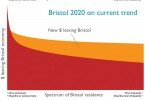
Utilizing the Fifth Discipline principles of systems thinking, we bring to you a representation of why cities, especially their economic development departments that manage the largest of budgets, choose to invest in the outdated practice of landing ‘the big one’ rather than cultivating its own creative economy that is known to create jobs more effectively.
The Context: First of all, it’s important to understand the long tail. The vertical axis in the graph to the left is economic output,
…
read more…
Posted by Neil Takemoto in
•
Economic Gardening |
(0)
Trackbacks |
Link |
Today’s entry will be a little uncommon, but rather extraordinary as we present Urban Cultures’ detailed presentation behind their Cultural Quarters: Necessary Conditions and Success Factors checklist. There really are few if any firms that have such fine-grain knowledge in helping cities invest in such places, and we’re glad to be associated with them.
The treatise follows:
An essential prerequisite for a vibrant cultural quarter is the presence of cultural activity, and this should include
…
read more…