CoolTown Studios

Friday, April 28, 2006

…or maybe some oddballs walked

Oddballs walking

...or maybe some oddballs walked

In our tribute to Jane Jacobs this week, the following is classic Jane.  Here’s a favorite study conclusion she included in her last book, Dark Age Ahead (pg. 75.) The question is what happens when you close roads?  The study findings from over sixty cases worldwide:

[Planner’s models assume that closing a road causes the traffic using it to move elsewhere… The study team… found that computer models used by urban transportation planners yield incorrect

read more…


Posted by Neil Takemoto in • Mobility | (0) Comments | (0) Trackbacks | Link |

Thursday, April 27, 2006

Creative class = ‘Thousands of flowers’

'Urban design themed flowers'

Creative class = ‘Thousands of flowers’

Most people associate Jane Jacobs (being remembered here this week) as an urbanist and sociologist.  But if anything, she’s an urban economist, and in this interview reveals in her ever poetic way the economic need for the creative class:

“Well I think that it’s a more dangerous situation - the standardization of what is being produced or reproduced everywhere, where you can see it in the malls, in every city, the same chains, the same products are

read more…


Posted by Neil Takemoto in | (0) Comments | (0) Trackbacks | Link |

Wednesday, April 26, 2006

Jane’s influence

Death and Life of Great American Cities

Jane’s influence

Jane Jacobs was, and is, the sage of urban planning.  Here are a few of her contributions that form the foundation for urban planning and development today and tomorrow:

Diversity.  This was the single underlying theme of her seminal work, The Death and Life of Great American Cities, and not coincidentally, the theme of Richard Florida’s Rise of the Creative Class.  Her four basic elements for diversity:  A concentration of people; small blocks; old and new buildings; a

read more…


Posted by Neil Takemoto in • Media & Resources | (0) Comments | (0) Trackbacks | Link |

Tuesday, April 25, 2006

Remembering Jane Jacobs

Jane Jacobs

Remembering Jane Jacobs

There is perhaps no person in the 20th Century who was more influential in raising the benchmark for our quality of life in cities than Jane Jacobs, who died on April 25, 2006 at 89.

Jacobs’ defining book, Death and Life of Great American Cities may have been written in 1961, but it still serves as a must-read and reference guide for contemporary urban planning.

Ms. Jacobs’ importance was recognized here a couple of years ago in the entry, Every town needs a Jane

read more…


Posted by Neil Takemoto in • Media & Resources | (0) Comments | (0) Trackbacks | Link |

Monday, April 24, 2006

A national shift toward cool or affordable places to live

Portland, Maine

A national shift toward cool or affordable places to live

It looks like the American Dream my be redefining itself, or maybe the image of the single-family house with the backyard and white picket fence never really was more than a huge campaign by GM and home builders to sell more of their product to the masses.  It worked, but it’s weakening now. Coincidence that so are GM and mall developers?

Census studies show that major metropolitan areas are losing population, and since the same

read more…


Posted by Neil Takemoto in • Attainability | (0) Comments | (0) Trackbacks | Link |

Friday, April 21, 2006

Beauty replaces blight in the Bronx

Urban Horizons II, Bronx, NY

Beauty replaces blight in the Bronx

What if one extraordinary woman wanted to help revitalize an economically-ravaged urban neighborhood, provide truly attractive housing for its residents, and provide a model for environmental stewardship and health?  Then that would be Nancy Biberman, president of WHEDCo (Women’s Housing and Economic Development Corporation), a nonprofit dedicated to bringing economic well-being to places where there is little.

Featured in the NY Times, Nancy’s group is

read more…


Posted by Neil Takemoto in • Green Development | (0) Comments | (0) Trackbacks | Link |

Thursday, April 20, 2006

Green urban village

Belmar, Lakewood, CO

Green urban village

While the Belmar development profiled yesterday is a great example of mixed-use development (albeit not one for the creative class), it also deserves kudos for its green building, as covered in this month’s New Urban News.

Pedestrian and Transit Orientation
The amount of sprawl avoided by such mixed-use compact development is the most under-appreciated, but by far creates the most significant environmental impact

Building Design
- Many of the buildings are

read more…


Posted by Neil Takemoto in • Green Development | (0) Comments | (0) Trackbacks | Link |

Wednesday, April 19, 2006

Replacing a shopping mall with a village

Belmar, Lakewood, COWhat to do with 104 acres/23 blocks of failed (the trend nowadays) regional shopping mall?  Well, after you get over how much land these malls really do eat up, you can find a visionary investment team like Continuum Partners to turn it into an urban village, as the image shows.

Yes, the homes in the new mixed-use development of Belmar in Lakewood, Colorado are priced too high for the average person and the stores are mostly chains - not a primary destination for the creative class - but the

read more…


Posted by Neil Takemoto in • Mixed-Use Developments | (2) Comments | (0) Trackbacks | Link |

Tuesday, April 18, 2006

CNN: College grads chase jobs, culture in the city

Pike Place Market, Seattle

CNN: College grads chase jobs, culture in the city

If you’re educated, urban areas are ‘in’, and have been for quite some time.  The Associated Press analyzed census data for 21 of the largest cities from 1970 up to 2004 and found that nearly all have added college graduates even though many had lost population overall, as highlighted in a recent CNN story.  The most educated?  Not surprisingly, Seattle (pictured), with more than half of adults have bachelor’s degrees, followed by San

read more…


Posted by Neil Takemoto in • Downtown Migration | (0) Comments | (0) Trackbacks | Link |

Monday, April 17, 2006

More evidence: Main streets are in, malls are out

Florence, Italy

More evidence: Main streets are in, malls are out

For the last few decades, we were pretty much forced to drive to malls to shop at chains.  It seems like the tide is turning, as one retail consultant puts it, “The behemoth mall is clearly giving way to more manageable, accessible and open-air centers.” In other words, downtown main streets are ‘in’ again.

In this Wall Street Journal article, the company that owns all those ‘Mills’ malls, Mills Corp., is being sold on account of

read more…


Posted by Neil Takemoto in • Retail Entertainment Districts | (0) Comments | (0) Trackbacks | Link |

Friday, April 14, 2006

A community center for arts groups

Flashpoint, Washington DC

A community center for arts organizations and groups

As profiled this week, there are workplace-community centers for creatives and high-tech entrepreneurs, but what about arts groups?

That’s why Flashpoint (a fitting name) in Washington DC was created.

Like C3 and ATI, Flashpoint was created as a physical place and implementation of a larger organization’s vision, in this case, DC’s Cultural Development Corporation (CuDC), a nonprofit dedicated to developing affordable spaces for

read more…


Posted by Neil Takemoto in • Entertainment & Arts | (0) Comments | (0) Trackbacks | Link |

Thursday, April 13, 2006

How does one go from creativity to jobs?

Austin Technology Incubator

How does one go from creativity to jobs?

To be more specific, how can a city and university collaborate to create a robust local economy?

The ATI (Austin Technology Center), the ‘real world implementation’ program of IC2 (Innovation, Creativity & Capital), a think tank founded at the University of Austin in 1977.  IC2 is focused on innovative science and technology economic development that allows “communities (and nations) to grow and prosper in a sustainable manner that promotes an

read more…


Posted by Neil Takemoto in • Economic Gardening | (0) Comments | (0) Trackbacks | Link |

Wednesday, April 12, 2006

Creative events for a creative venue

C3, Richmond VA

Creative events for a creative venue

What good is a great theater or hall without events worth going to?  In the last of our three-part profile of C3 in Richmond, here’s a look at what goes on in one of the coolest destinations around.

Breakfast Club - Each month this morning meeting helps provide direction on how business and human resource leaders can instill more creativity in their own people.  Recent topics ranged from how creativity can assist problem solving to communications.

C3

read more…


Posted by Neil Takemoto in • Entertainment & Arts | (0) Comments | (0) Trackbacks | Link |

Tuesday, April 11, 2006

How a ‘living room for the creative community’ came to be

C3, Richmond VA

How a ‘living room for the creative community’ came to be

Just as Richard Florida’s research shows jobs follow talent, CS, the only workplace/living room for the creative/entrepreneurial community of its kind (profiled yesterday) would not have happened without talent.

The initial talent in C3’s case is Bob Mooney, chairman of the Greater Richmond Chamber of Commerce, and Andy Stefanovich, ‘In Charge of What’s Next’ at Play, an award-winning local creative consulting firm and a model of

read more…


Posted by Neil Takemoto in • Creatives | (0) Comments | (0) Trackbacks | Link |

Monday, April 10, 2006

A creative third place every downtown needs

C3, Richmond VA

A creative third place every downtown needs

Followers of this website know that we focus on neighborhoods and districts that attract the creative class, but if there ever was an example of a single venue that does so, it’s C3 (the Creative Change Center) and there’s really nothing like it anywhere.

Surprise, it’s not in Manhattan or Austin, but in Richmond, VA, which should be encouraging to cities that aren’t Manhattan or Austin.  Richmond, however, is a growing mecca of creativity

read more…


Posted by Neil Takemoto in • Third PlacesWorkplaces | (0) Comments | (0) Trackbacks | Link |

Friday, April 07, 2006

Can you easily identify the three new buildings?

Historic Front Street, Manhattan

Can you easily identify the three new buildings?

In this elevation there are six 18th century buildings designated as City, State and Federal historical landmarks, as well as three brand new buildings.  It’s one of the best examples of mixing historic with contemporary that I’ve seen.

While it may not be all too difficult to pick them out, it’s not like the three new buildings stand out either, helping dispel the belief that anything new is automatically going to destroy the long-time

read more…


Posted by Neil Takemoto in • PlaceMaking | (0) Comments | (0) Trackbacks | Link |

Thursday, April 06, 2006

The coolest of the CNU Charter Award winners

Historic Front Street, Manhattan

The coolest of the CNU Charter Award winners

Well, outside of the fact that it’s hardly affordable, the renovated/new Historic Front Street in Seaport North (near the Brooklyn Bridge) in Manhattan is the best creative class development among the seventeen CNU Charter Awards profiled yesterday.

Eleven 18th century buildings plus three brand new buildings host 96 residential apartments for rent from 600 s.f. to 1400 s.f., plus thirteen retail spaces on the ground floor.  The project

read more…


Posted by Neil Takemoto in • Mixed-Use Developments | (0) Comments | (0) Trackbacks | Link |

Wednesday, April 05, 2006

CNU’s annual Charter Awards announced

CNU's Charter Awards

CNU’s annual Charter Awards announced

If you’re wondering what the best new models for placemaking are each year, it’s wise to keep tabs on the CNU’s (Congress for the New Urbanism) annual announcement of its Charter Award winners.

Out of 160 entries, here are the 17 they chose, and I’ll profile my favorite over the next couple of days.  Each year the winners are increasingly urban, which is refreshing over past selections that were largely greenfield (ie ‘well-designed sprawl’)

Block,

read more…


Posted by Neil Takemoto in • Mixed-Use Developments | (0) Comments | (0) Trackbacks | Link |

Tuesday, April 04, 2006

In the UK, new car-free developments a fast-growing trend

Carlton Drive, London, UK

In the UK, new car-free developments a fast-growing trend

London’s Telegraph article, The fond farewells to four wheels, says it all here:

“Ms Cameron and Ms Jones are part of a new generation of homeowners being lured away from their cars. It’s a fast-growing trend. There are already quite a few developments - mostly urban new-builds - that aim to diminish car use among their residents, if not to phase it out entirely.”

One of the developments profiled is Carlton Drive, a 22-unit

read more…


Posted by Neil Takemoto in • Mobility | (0) Comments | (0) Trackbacks | Link |

Monday, April 03, 2006

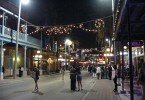
Tampa Bay gets creative

Ybor City, Tampa Bay FLThe creatives in Tampa Bay, FL knew they were important to their city, they just didn’t know how to communicate that… until Richard Florida, author of the best-seller Rise of the Creative Class, presented to 500 of them in April 2003.

Later that year, CreativeTampaBay was founded, a nonprofit “dedicated to connecting and energizing the community’s assets to cultivate an environment that encourages innovation, expands the economy and is a magnet for creative people.”

Their principles

read more…


Posted by Neil Takemoto in • Creatives | (0) Comments | (0) Trackbacks | Link |
Page 1 of 1 pages