
CoolTown Studios

Friday, July 29, 2005

The pearl of Portland

Pearl District, Portland OR

The Pearl of Portland

The Pearl District in Portland, Oregon is one of the finest new urban redevelopments in the country, transforming a warehouse district into an artist district into a residential community.  Unfortunately, the new lofts are anything but affordable (the population doubled in the last couple of years), but the public places, streets, farmer’s market and galleries - all free to inhabit - are among the best in the city.

As the story goes, Thomas Augustine, a local gallery

read more…


Posted by Neil Takemoto in • Cool Places | Link |

Thursday, July 28, 2005

A year in the life of a family gone ‘carless’

The el, Chicago

A year in the life of a family gone ‘carless’

Understanding the target market is imperative to building places that they would embrace, or in business terms, buy or lease.  Here’s a look into a ‘year in the life’ of a Chicago family man who decided to give up their only car.

His full account is here.  Here’s an excerpt:

“...Why not just turn our car in when the lease expires and see what it’s like? If it doesn’t work out, we can go lease a new car anytime we want. Meanwhile, we’ll save a

read more…


Posted by Neil Takemoto in • Mobility | Link |

Wednesday, July 27, 2005

The dawning of public-private partnerships in innovative development

Gateway, Chinatown, DC

The dawning of public-private partnerships in innovative development

Let’s face it - creative urban development is costly, much more so than in suburbia, for reasons previously explained.  Land and parking provisions are simply too expensive for the private and public sectors to handle alone - which is why public/private partnerships (PPPs) accounted for $75 billion in real estate last year - ‘creative alliances’ if you will; meeting both financial and social bottom lines.  There are ways to
read more…


Posted by Neil Takemoto in • Government Innovation | Link |

Tuesday, July 26, 2005

Imagine a neighborhood of these…

Soho, NY

Imagine a neighborhood of these...

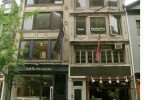
Tired of apartment buildings, strip malls and office parks?  How about a neighborhood of lofts and offices over some cool independent coffeehouses (like yesterday’s), cafes and pubs - a whole community of these places like the ones here in SoHo, Manhattan.  And of course, oh, about ten times less expensive.

That’s the vision more and more cities and investors have in store for many of us - human-scaled, mixed-use urban buildings with lots of daylighting

read more…


Posted by Neil Takemoto in • Housing & Lofts | Link |

Monday, July 25, 2005

More written values, better coffeeshop?

Grand Cafe, Brooklyn

More written values, better coffeeshop?

Do the cafes and coffeeshops in your neighborhood have stories, soul… values?
Fast Company magazine did a little informal study of company values and found that “having at least some values of two words or more pumped up returns by 16% over the S&P, companies with all one-word values lost 2%, and Berkshire Hathaway, whose core values run some 5000 words, beat the S&P by 65%.”

So here’s a suggestion and litmus test if you’re opening up a new venue -

read more…


Posted by Neil Takemoto in • Retail Venue Development | Link |

Friday, July 22, 2005

Neighborhoods funding the new arts, not corporations

Wilma Theater, Philadelphia

Neighborhoods funding the new arts, not corporations

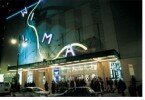
Corporate funding for the arts dropped 48% in the last 15 years; local government support declined 49% in the last your years - yet downtown arts are thriving.  What gives?  Apparently, the neighborhoods are.

In Philadelphia, city center art galleries, musuems, performing arts, and theaters as well as artist-inspired nightclubs and downtown restaurants have helped establish a downtown population of 88,000.  In downtown Wilmington, DE,

read more…


Posted by Neil Takemoto in • Entertainment & Arts | Link |

Thursday, July 21, 2005

Cobblestone streets are good for you

Prague

Cobblestone streets are good for you

We know cobblestone streets aren’t the best for driving on, but that probably means just the opposite for people.  Behavioral researchers from the Oregon Research Institute are proving it’s true.

Their studies show that people who walk on cobblestone streets enjoy significant improvement in balance, measures of mobility and blood pressure.  The stones seemed to serve as a vast community of massage therapists for the feet.  The surprising result was that

read more…


Posted by Neil Takemoto in • Health & Fitness | Link |

Wednesday, July 20, 2005

Schools as community centers

John A. Johnson Achievement Plus Elementary, St. PaulWhat a waste that a beautiful school for kids by day becomes a closed-down building at night, especially if the spaces look like the ones in the last couple of blogs.

I blogged about this almost two years ago in Schools as Third Places, and the schools as community centers idea is becoming increasingly popular.  In fact, there is such an organization by the same name that focuses on this very trend.  Their first outstanding recognition goes to the John A. Johnson Achievement Plus Elementary

read more…


Posted by Neil Takemoto in • Youth & Education | Link |

Tuesday, July 19, 2005

Why are urban schools on the rise?

Orchard Gardens K8, BostonSo, there was that urban, city, downtown schools are getting better.

Why? How?

Some of the school administrative reasons are as follows:
- Better managed, more results-oriented school leadership, with progressive mayors and experimentation
- The No Child Left Behind Act that revealed the achievement gap among ethnic groups, resulting in educators getting much more serious about teaching minorities.

I think a new generation of parents should be given way more

read more…


Posted by Neil Takemoto in • Youth & Education | Link |

Monday, July 18, 2005

Urban schools getting better?! No… really?!

WMEP Interdistrict Downtown School, MinneapolisAsk just about any parent-to-be why they feel compelled to eventually leave the active, pedestrian-oriented urban neighborhood they desperately want to stay in and head for the ‘burbs… “It’s the schools.  The suburban schools are simply better.”

Could they finally be wrong?

- “This is no less than one of the biggest turnaround stories of any urban school system in the United States,” Baltimore Martin O’Malley said, in light of improved test scores in his city and across the country.

-

read more…


Posted by Neil Takemoto in • Youth & Education | Link |

Friday, July 15, 2005

The coolest restaurants are going green

Blossoming Lotus, Pearl District, Portland, OR

The coolest restaurants are going green

For progressive, community-oriented individuals like yourself, one way to identify a like-minded restaurant is to see if it’s gone green.  Restaurants are no small impact either, they actually represent 10% of the U.S. economy.

What are the signs of a progressive cafe or coffeehouse?  It varies, but the Green Restaurant Association (GRA) is trying to make it easier for you.  The best thing is to look for the GRA seal.  Here are their most visible

read more…


Posted by Neil Takemoto in • Green Development | Link |

Thursday, July 14, 2005

Goodbye to the corporate cubicle

Herman Miller in DC

Goodbye to the corporate cubicle

Since we can’t all be entrepreneurs and artists, many of us need to work for corporations and government.  But when going to work in a cool town, don’t expect to waste away in a cubicle prison.

Check out this demonstration workplace in Washington DC put together by Herman Miller.  Corporate-style office, yes, but no cubicles.  Notice that none of the private offices are along the main window wall - that means great views and more importantly, natural

read more…


Posted by Neil Takemoto in • Workplaces | Link |

Wednesday, July 13, 2005

Next gen green building

Green building

Next gen green building

The next generation isn’t just interested in green building, it’s a requirement.  It isn’t about having a ‘green building’ expert on the development team, it’s a collaboration of the entire team being knowledgeable on it.  As far as people putting money where their mouth is, the US Green Building Council has national standards; the Leadership in Energy and Environmental Design (LEED) rating system for just that.  It’s no coincidence that these trends are converging -

read more…


Posted by Neil Takemoto in • Green Development | Link |

Tuesday, July 12, 2005

Redefining communal living

Santee Courts, L.A.

Redefining communal living

Communal living to the previous generation meant that you had to take turns cooking for all the residents in your community every Sunday at a common hall.  The fact that you had to do anything in the name of community kind of melted the concept in my book.

The folks at Youth Intelligence, a market research firm focusing on Gen X and Y trends, has noticed a few real estate trends that are redefining what communal living is:

- At The Orion in NYC, the laundry

read more…


Posted by Neil Takemoto in • Community Building | Link |

Monday, July 11, 2005

It ain’t so trendy if it’s inexpensive

Sea, Williamsburg, Brooklyn, NY

It ain’t so trendy if it’s inexpensive

Hey folks, just got back yesterday from a two-and-a-half week vacation to my home in Hawaii, then my best buddy’s wedding, so I’m a little late on today’s post.  I had the other posts running automatically.

I’ve been eating out quite a bit lately because of this, which makes me appreciate the handful of restaurants that serve up a one-of-a-kind dining environment and entrees less than $7.  Sea in Williamsburg, Brooklyn is one of those places

read more…


Posted by Neil Takemoto in • Attainability | Link |

Friday, July 08, 2005

Is smaller becoming better?

Cafe Grande, Williamsburg, Brooklyn, NY

Is smaller becoming better?

First, the facts:

World Wildlife Federation (WWF) research shows people are consuming resources 20% faster than our ability to support renewal. The amount of natural resources used compared with what nature can support increased 2.5 times over the past 40 years, with the average North American using twice that of Europeans, and seven times that of Asians or Africans.

The mass production economy of the last century brought bigger houses, yards, closets, cars,

read more…


Posted by Neil Takemoto in • Mass Customization | Link |

Thursday, July 07, 2005

West Palm Beach’s second encore

Affinity Lab

West Palm Beach’s second encore

As presented yesterday, first came the renaissance of the downtown, then CityPlace, now West Palm Beach’s first transit-oriented development (TOD).  The buildings in the bottom right of the image make up CityPlace - notice the pie-shaped ‘square’ that is the epi-center of free entertainment in the area.

With three times more housing than CityPlace (2000 residences vs 600), a million s.f. of office (CityPlace has none) and 100,000 s.f. of retail (a third

read more…


Posted by Neil Takemoto in • Government Innovation | Link |

Wednesday, July 06, 2005

Success spreading in West Palm Beach

West Palm Beach TOD

Success spreading in West Palm Beach

In 2000, downtown West Palm Beach had no more than 2000 residents with only 20% of its main street occupied.  Today the main street is at 90% and the downtown population is on track for 10,000 in a few years.

“I’ll have what they’re having.”

Leadership, vision, and more leadership. It starts with one forward-thinking mayor, Nancy Graham (pictured), initiating a form-based planning code that guides what the urban fabric will look like (i.e. think San

read more…


Posted by Neil Takemoto in • Government Innovation | Link |

Tuesday, July 05, 2005

Great place-making… for visitors

CityPlace, West Palm Beach

Great place-making… for visitors

CityPlace, West Palm Beach is one of the most beautiful, European-inspired new retail entertainment villages in the U.S… for the rich.  $300K+ is the starting point for any of the 600 residences, its 20 restaurants are high-end, and its chain-driven stores even higher.

Still, for budget-minded visitors and local residents alike, there’s no better place in the area to sit back and enjoy anything remotely close to life in an Italian piazza.  The vastness of

read more…


Posted by Neil Takemoto in • PlaceMaking | Link |

Friday, July 01, 2005

Indicators that ‘eyes on the street’ are on the rise

Mezzo, Astoria, NY

Indicators that ‘eyes on the street’ are on the rise

Based on this week’s series, what are the commercial, residential and retail indicators that personal safety is improving in formerly unsafe neighbhorhoods, and that it may be time to invest?

Cool companies: This is often the first indicator, assuming workplaces ever become a common component in the neigborhood, since they’re inhabited during the day. In DUMBO (Down Under Manhattan Bridge Overpass), Brooklyn, NY, Jacques Torres, one of

read more…


Posted by Neil Takemoto in • Public Safety | Link |
Page 1 of 1 pages